Spring 2024. Archived project. Designed, reviewed, and drawn for fabrication; machining delayed. An accumulator failure that year cancelled the team's competition trip, so the box never went on a car. Parts of the design were reused in later years. Co-authored the 90% design review with Taz Oldaker, under Byron Oser's technical direction. Byron owned the busbar, heat gen, and fastener hand calcs.
Summary
- Housed energy monitoring devices, safety circuits, and various resistors and connectors.
- Handles 300–500 V in up to 80 kW bursts.
- Guidance from electrical members and sub-leads for electrical layout and rule compliance.
- Created mounts and machining drawings for component mounting and vibration mitigation.
- Tight space constraints inside the sidepod packaging volume.
- First major project, done under tight time constraints. Many vectors for improvement (called out further down the page).
What the deck covered
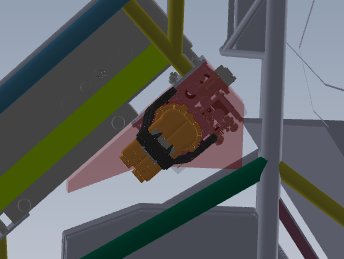
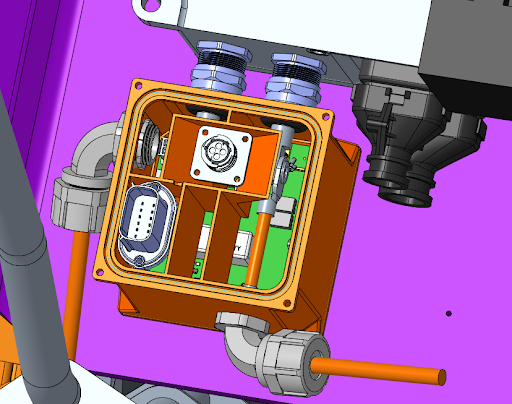
The HV junction box houses the energy meter, discharge circuit, and HVD plug. We had to make it fit a small bounding box under the sidepod, pass FSAE EV rules on clearance and interlocking, and be manufacturable in a shop midterm season.
What I did
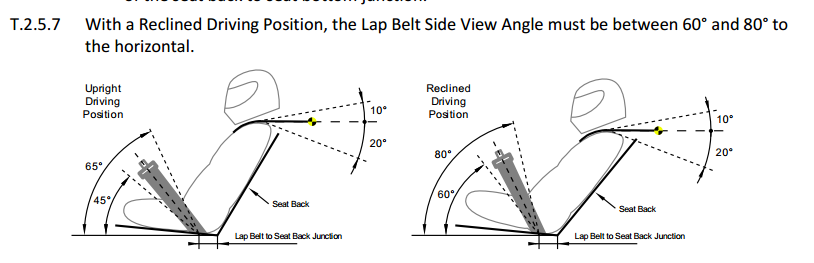
- Walked the design through FSAE EV rules compliance slide by slide: HVIL, discharge circuit, TSMPs, HVD plug, clearance. Actual rule numbers are in the deck as image captures, not text.
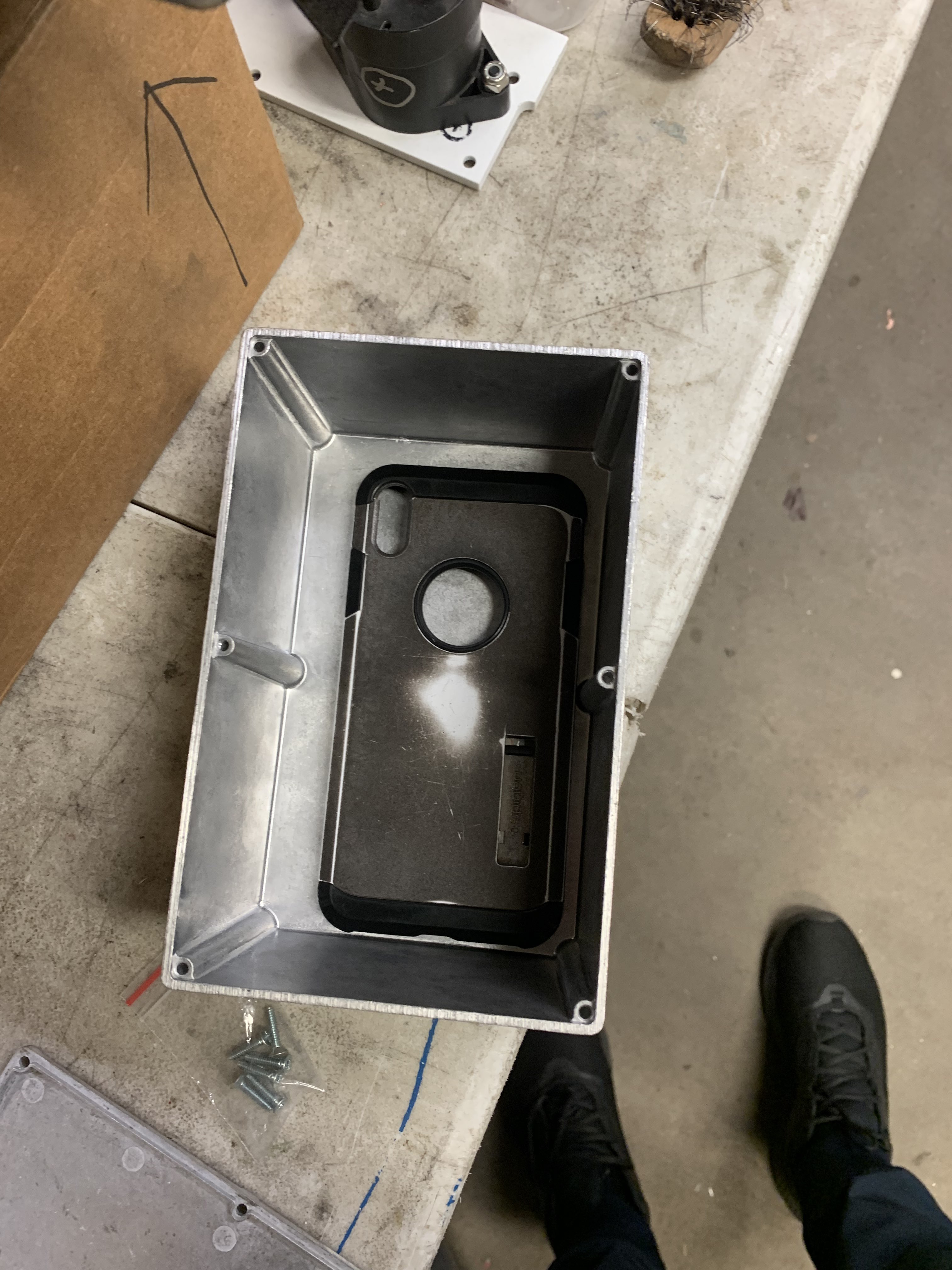
- Ran the material tradeoff: sheet metal vs extrusions vs OTS case. Landed on a Polycase box lined with Nomex for waterproofing and shop speed.
- Drew engineering drawings for the milled internal plates, columns, and clamps. These are the only tangible artifacts from the build that made it to the shop queue.
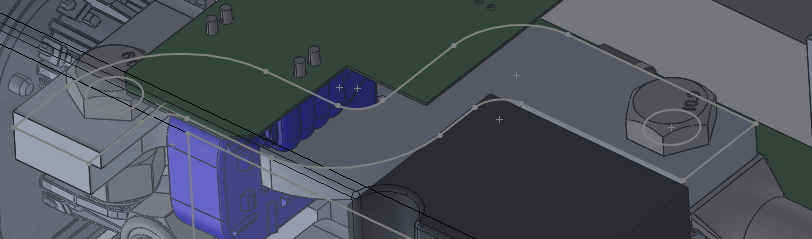
- Spec'd the busbar manufacturing plan: 1/4" 1100-series aluminum, waterjet cut, brake bent. Planned a laser-cut mockup to validate layout before committing material.
- Compared Option A (tack-on external box) against Option B (integrated into the accumulator housing). Landed on A on timeline grounds.
- Compiled the cost breakdown and sourced the housing. The $82 CAD Polycase was a $27 USD box with $30 shipping.

What did not happen
The car never drove that year. The accumulator ran into issues that forced the team to cancel the competition trip, and the junction box was never manufactured. The design review, drawings, and sourcing plan are what exist. The validation test box mentioned on slide 18 was planned but never built.
What I would do differently
Option B. Integrating the junction box into the accumulator housing lowers mass, shortens HV cabling, and moves the volume away from the driver. We flagged it in the deck as the worthwhile future path, but it needed a parallel accumulator redesign we could not fit into the schedule.
From the design review deck
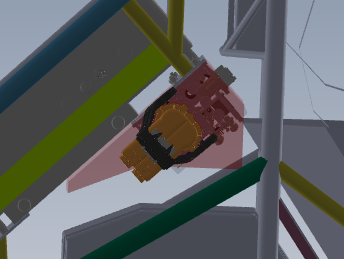
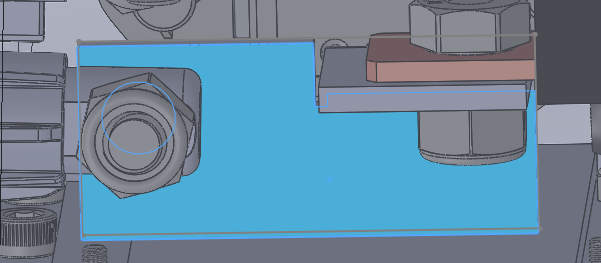
A few slides from the 90% design review. Full deck lives in the vault; these three give a sense of the internals thinking that went in.
What I could revisit
The busbar calculatorI built later is a natural retrospective tool for this project. Running the EV24 busbar geometry through the thermal model would put an I²R and convection-driven temperature rise behind the 1/4" aluminum busbar spec, turning a 2024 intuition into a verifiable number. That's a self-contained follow-up if I come back to this page.